Oh,holihole
solo exhibition at Sardenberg - São Paulo, Brazil / 2025
curated by Ricardo Sardenberg
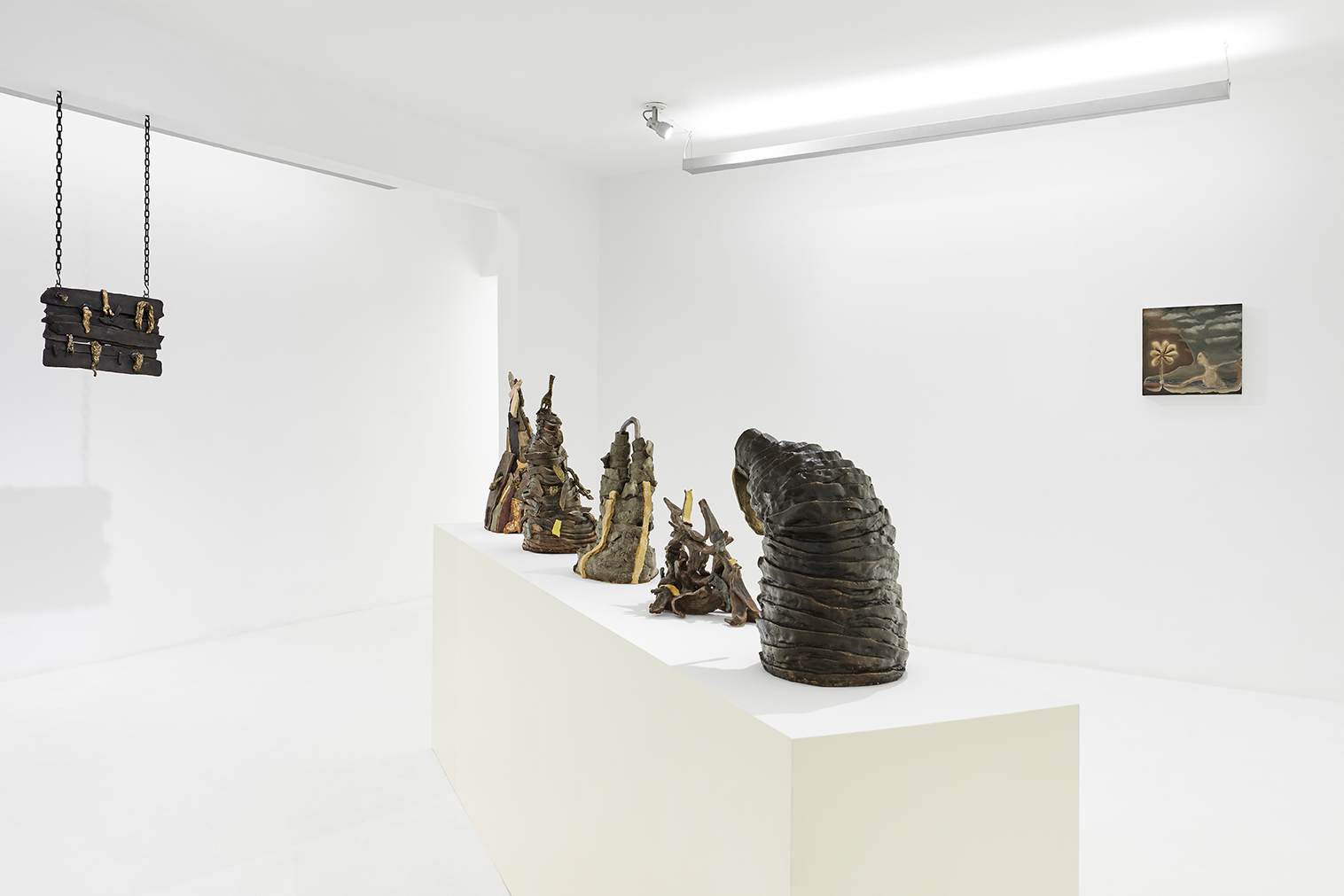

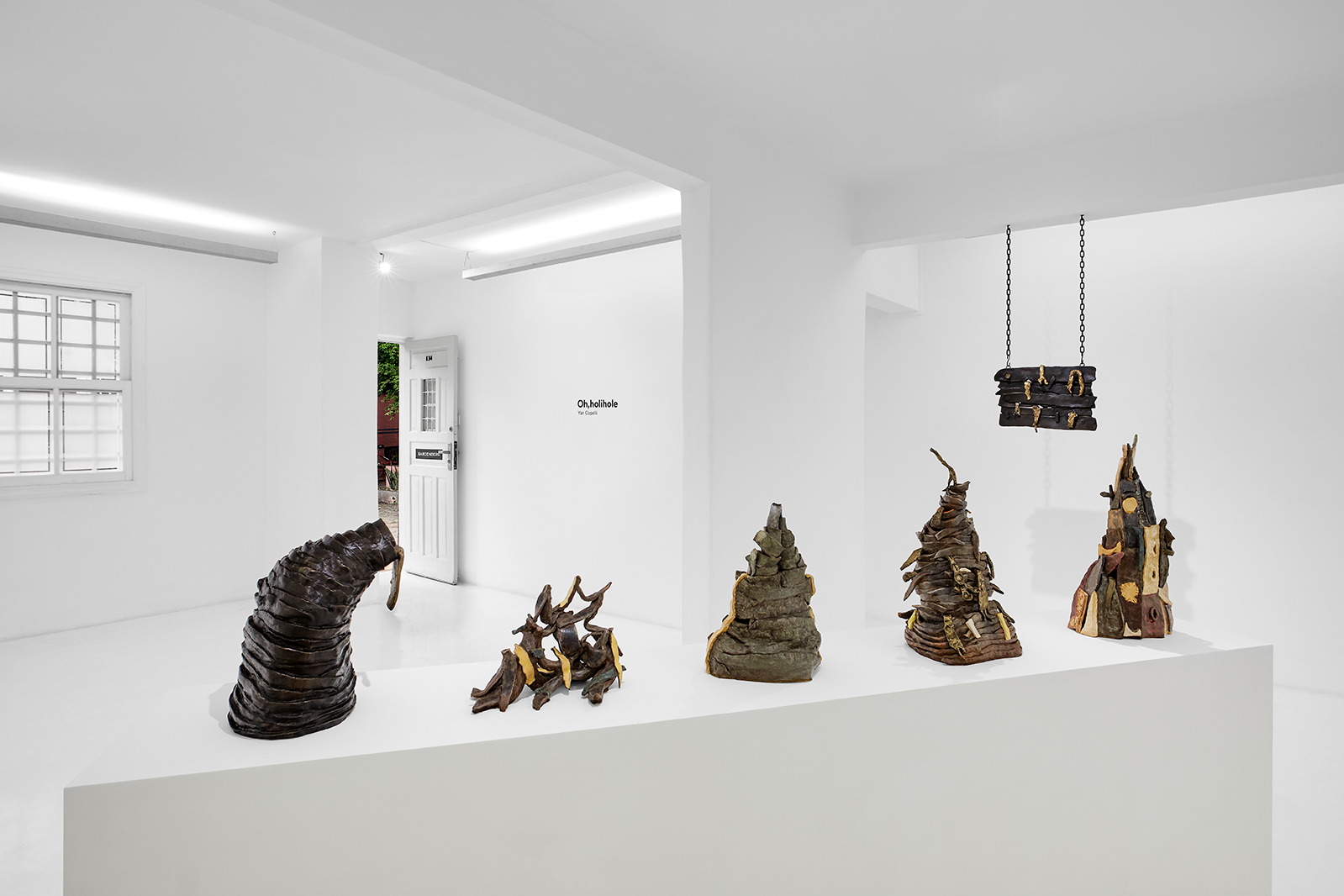

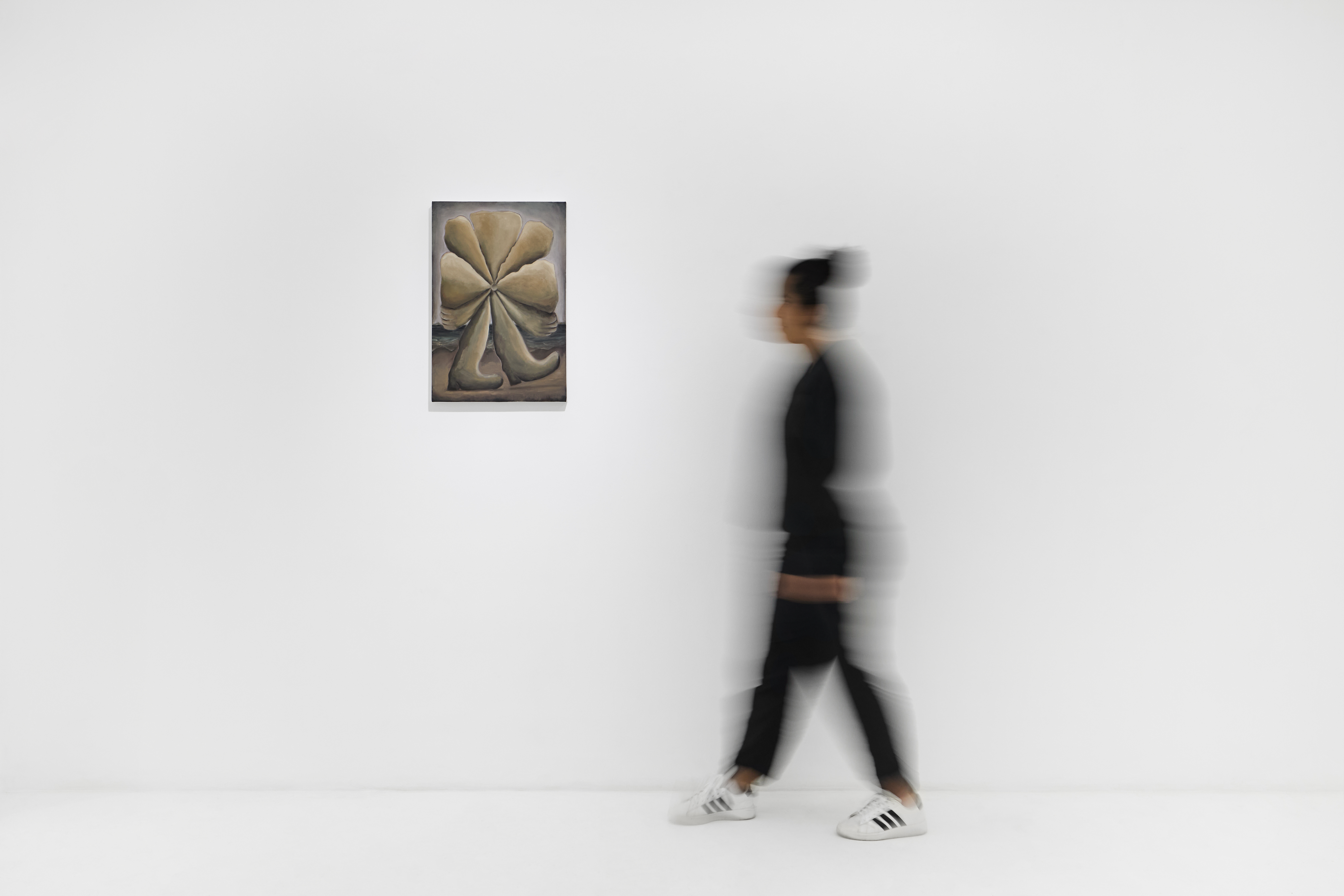
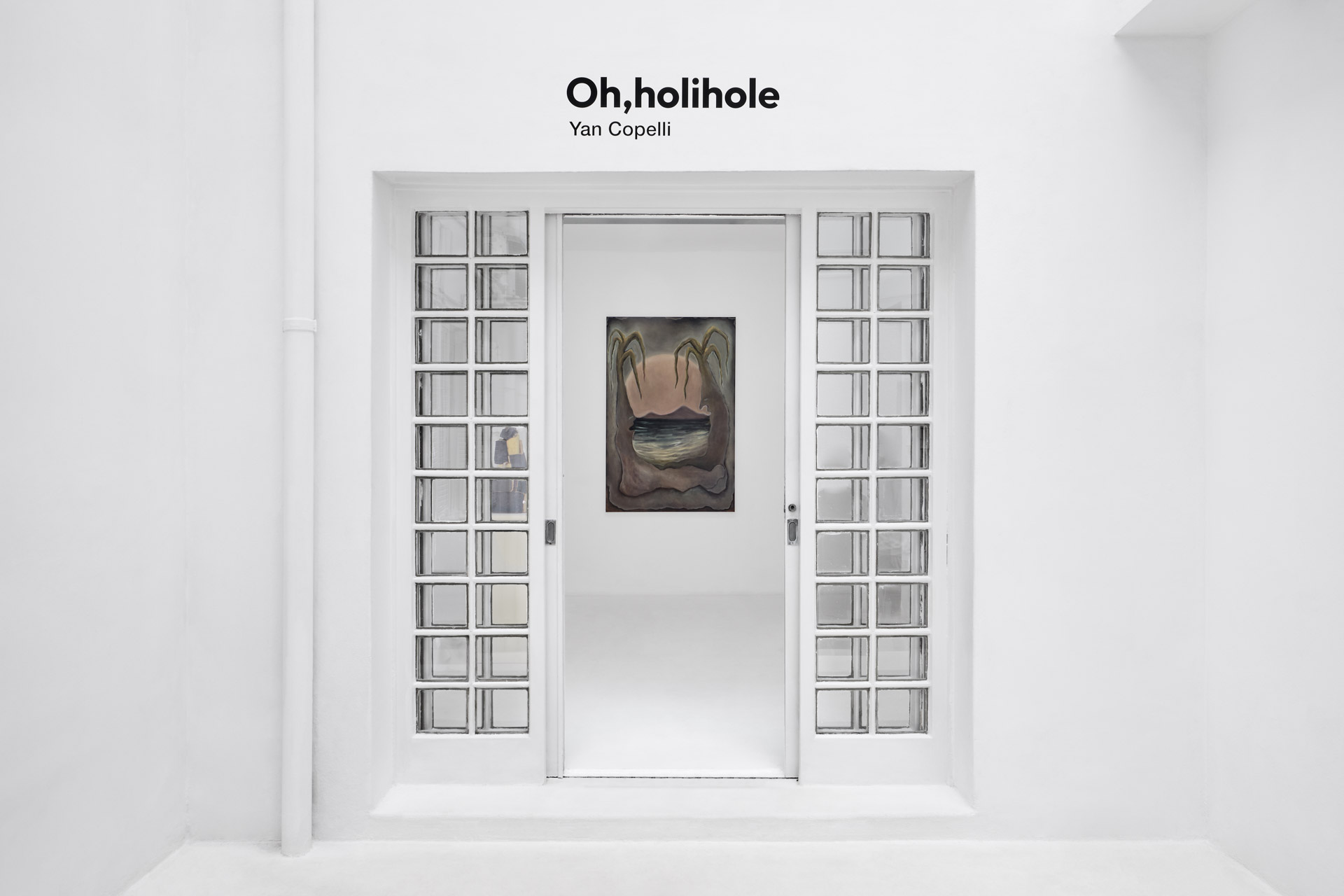
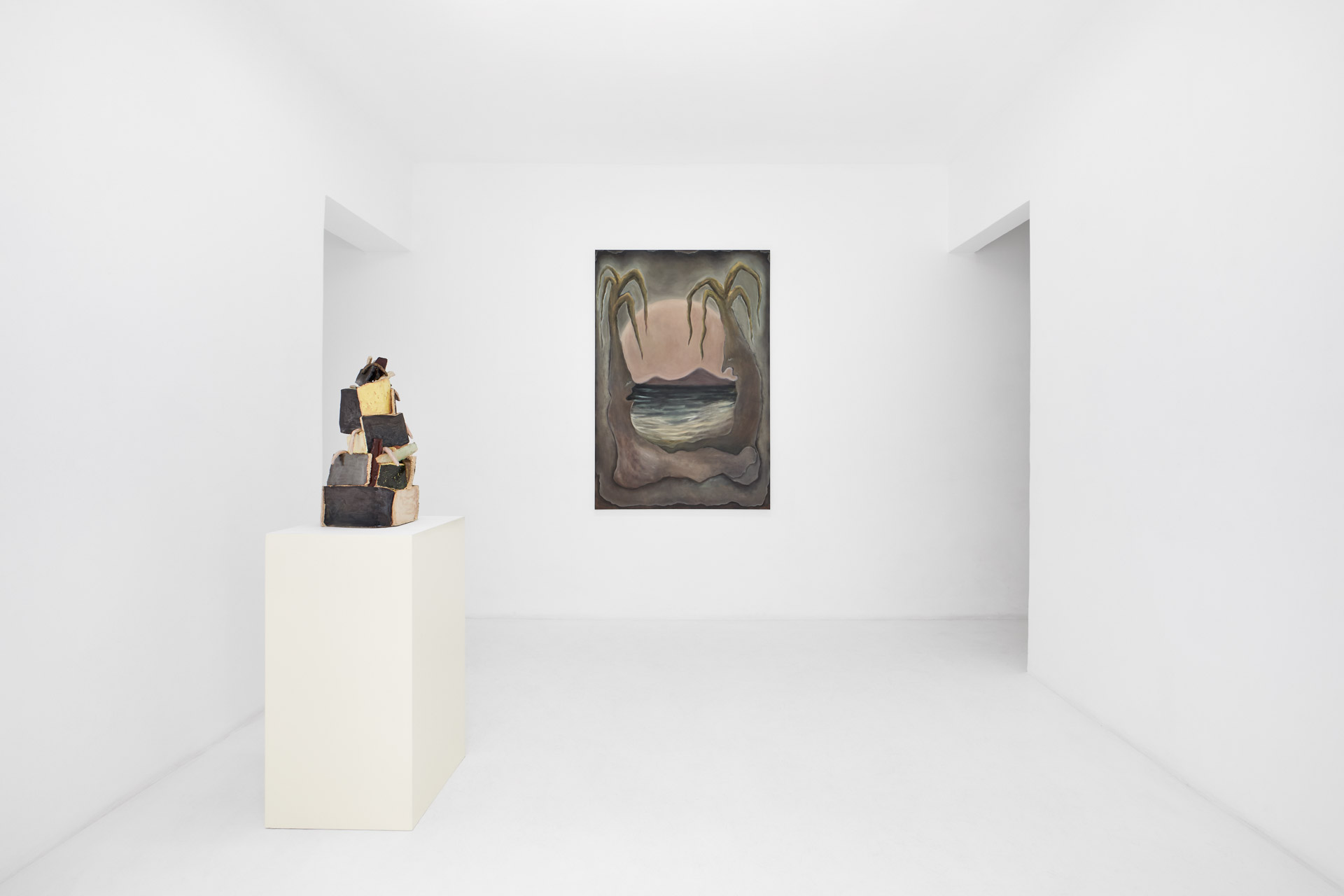
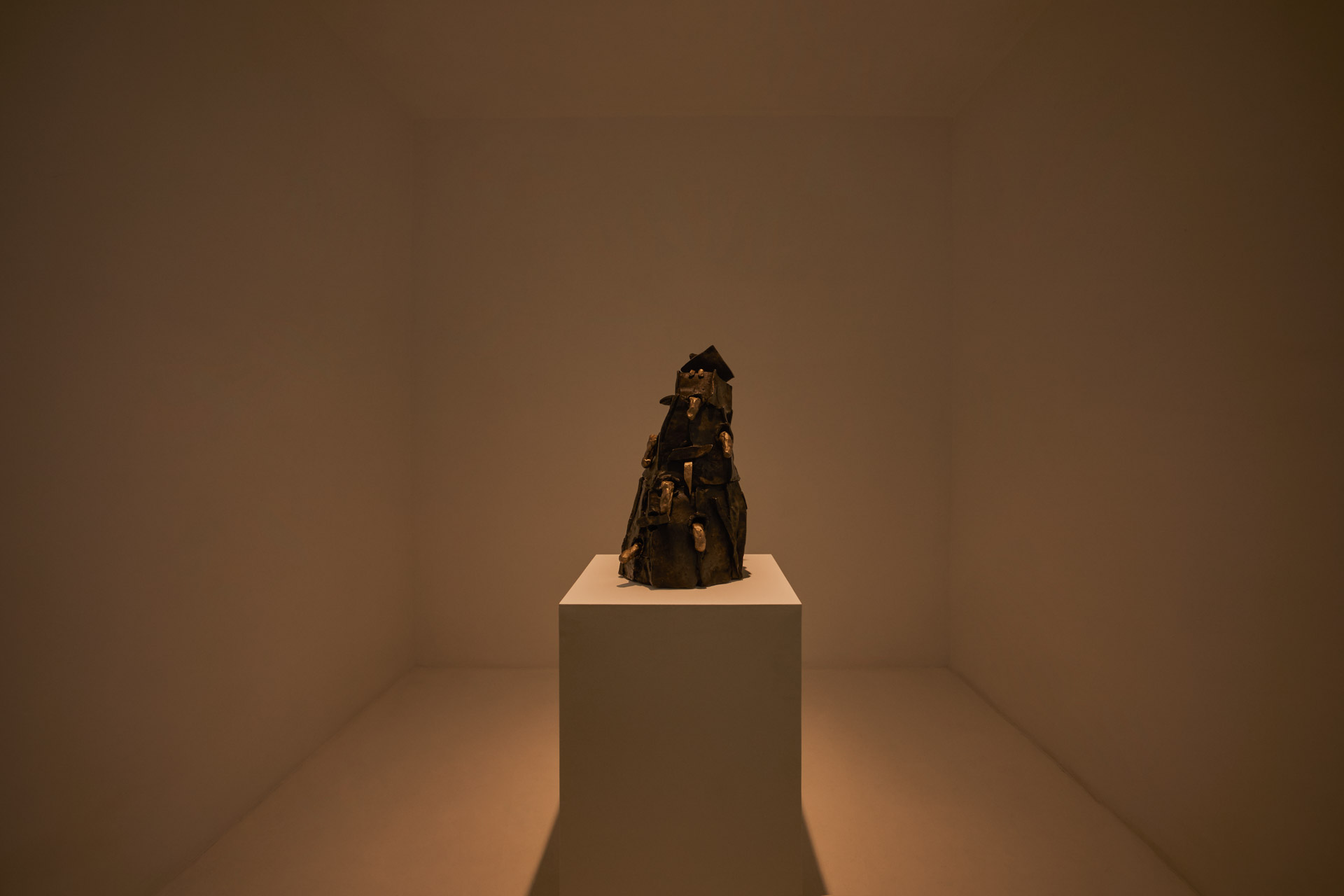
Yan Copelli's work presents itself as a disturbing inscription in the contemporary aesthetic regime, in which nothing is taken for granted and each form is traversed by tensions between visibility and opacity, desire and estrangement, attraction and repulsion. By creating objects that resemble crumbling architectural fragments and abstract organic forms—resonating with both the body and the plant world—Copelli does not attempt to stabilize meanings, but rather opens cracks and establishes discomfort zones. It is at this point that the notion of unease becomes key to understanding his poetics.
The aesthetic regime of Copelli's sculptures and paintings is based on a duality: art is autonomous, emancipated from utilitarian or representational functions, but it is also heteronymous, as it intervenes in the world as design and shifts sensibilities in the way of seeing, feeling, and thinking. This contradiction is irreducible and it gives rise to a structural unease: one never knows whether the work should be experienced as pure formal play or as representation, whether it should be interpreted as an intimate experience of form or as a collective allegory. It is in this undecided space that his sculptures and paintings gain vitality, reflecting the tensions of the contemporary world.
His work evokes, at the same time, eroticism and ruin, tropicality and exile. It possesses a physicality marked by heat, by the humidity of things that melt and slide, by the precariousness of forms destined for erosion and collapse. The eroticism that pulsates within it is often uncomfortable, desire emerges contaminated, crossed by prohibitions, forces of pleasure and repulsion. This body of work exposes both the intensity and the failure of forms of pleasure.
The unease is not simply a feeling of inadequacy in Yan Copelli. It is through what can be seen in his sculptures, an outer surface and, conversely, cracks and joints that also suggest a dark and unknown interiority. The works insist on ambiguous combinations of forms and symbols—sometimes tropical, sometimes architectural, sometimes corporeal—shifting what we recognize into the realm of strangeness that arises from the very tension between attraction and repulsion in design. Copelli's operation consists precisely in giving body to this unease — transforming the indecision of form into a “thing” and projecting a design in collapse because it is simultaneously beautiful and ugly. Thus, his works are machines of instability, devices that demand an active position from the viewer, which calls taste into question. There is no peaceful enjoyment, nor definitive interpretation, but rather an activation of discomfort at the limits of aesthetic experience. The viewer is emancipated insofar as, based on his or her perception, he or she must take responsibility for its meaning, invent its own interpretation, sustain the ambiguity, and decide for him or herself what he or she is seeing.
This discomfort is further intensified by the way Copelli rewrites artistic traditions. There are echoes of Maria Martins and Wifredo Lam, of Tunga and Louise Bourgeois, but never as reverent references. These are deviant evocations, which insert the surrealist and modernist heritage into a tropical present marked by sexual exhaustion and urban precariousness. The viewer does not know whether to see in them monuments of a degraded modernity, altars of desire, or archaeological remains of an aborted future. At the same time, his production dialogues with a global horizon, as if the local experience were transformed into an index of planetary tensions: environmental, social, and political collapses that transmute into displacements of desire and a canceled libido.
Copelli shows us, almost as a commentary, that contemporary art does not need to seek anesthesia and simplification, but rather intensifies it to the point of questioning its usefulness. His work does not propose a resolution, but insists on ambivalence: it is contaminated beauty, eroticism crossed with ruin, materiality that threatens to collapse. It is in this friction that the work finds its critical and poetic strength. The unease is not a side effect, but rather the very condition of the contemporary aesthetic experience.
Ricardo Sardenberg
Curator
Curator